Phone:
(701)814-6992
Physical address:
6296 Donnelly Plaza
Ratkeville, Bahamas.

Phone:
(701)814-6992
Physical address:
6296 Donnelly Plaza
Ratkeville, Bahamas.
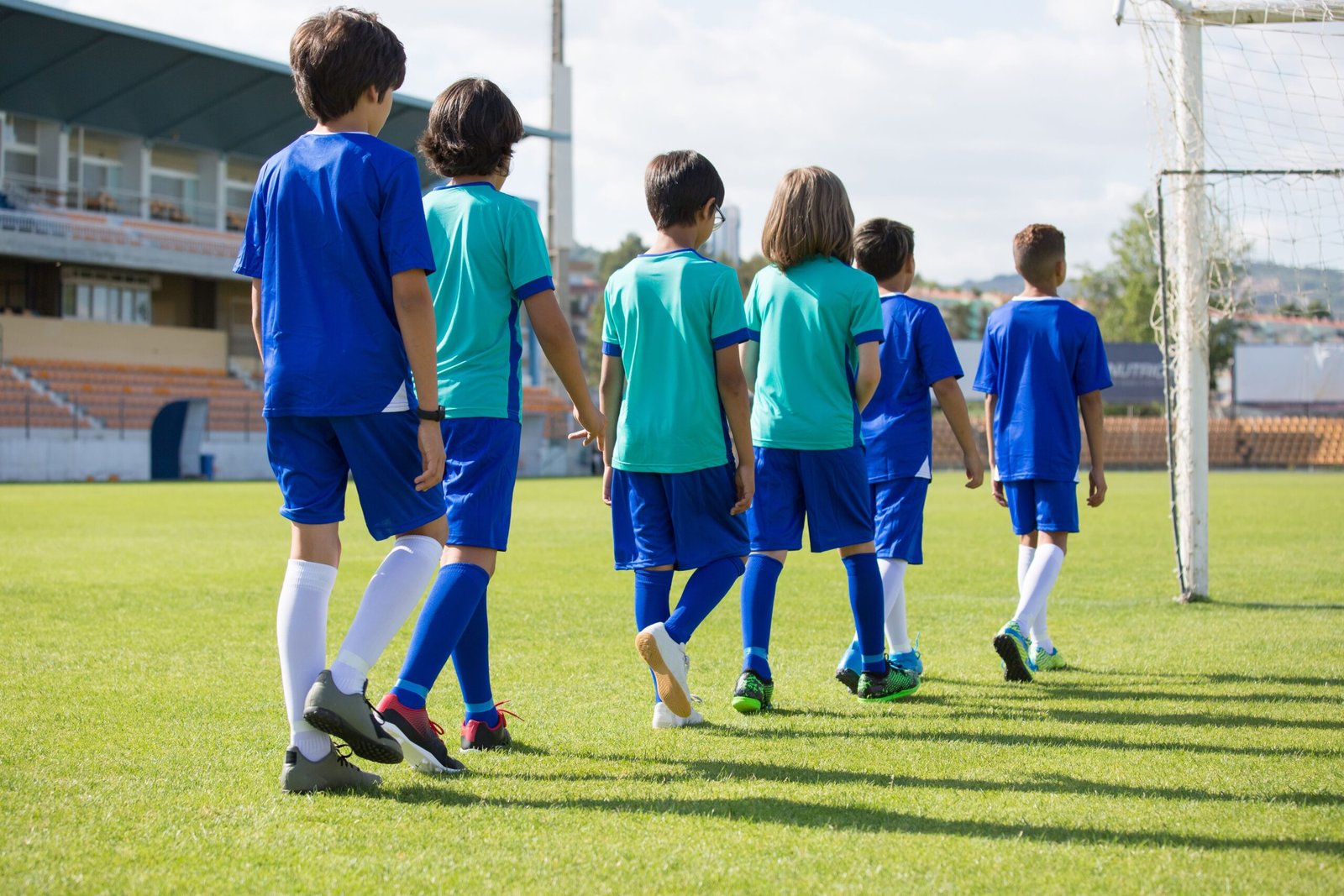
For clubs, sports organizations, schools, and corporate teams, ordering custom teamwear is about more than choosing a shirt and adding a logo.
A successful teamwear program needs consistent sizing, coordinated colors, reliable branding, suitable fabrics, clear quantity planning, and dependable production.
When multiple garments are produced for the same team or organization, even small inconsistencies can become noticeable. A different shade of color, inconsistent logo placement, or variations in fit can affect the overall appearance of the team.
For this reason, custom teamwear production should be managed as a complete apparel project rather than a simple printing order.
Custom teamwear refers to apparel developed specifically for a club, organization, school, company, or sports team.
Depending on the project, teamwear can include:
Teamwear can be designed around an organization’s existing brand identity, including its colors, logos, typography, and other visual elements.
For organizations managing multiple teams or different activities, a coordinated apparel range can also create a more professional and recognizable appearance.
Dora Garment provides custom apparel manufacturing services for teamwear, uniforms, golf apparel, and other branded clothing, including fabric sourcing, sample development, bulk production, logo application, and quality control.
Before production begins, the organization should establish exactly what needs to be produced.
A clear specification can include:
For larger organizations, it is useful to prepare one consolidated specification rather than sending different information at different stages.
This gives the production team a clear reference throughout sampling and bulk production.
The right fabric depends on the activity, environment, and expected frequency of use.
For active sportswear, performance fabrics may be appropriate because they can provide:
For corporate or club teamwear, the priorities may be different.
A polo shirt used for staff or club events may require a more structured appearance, while a training top may prioritize stretch and breathability.
Fabric selection should therefore be based on the intended use rather than simply choosing the lowest-cost option.
Dora Garment offers fabric sourcing and customization for different apparel applications, including performance fabrics, polyester blends, cotton blends, and piqué fabrics.
One of the most important parts of teamwear production is making sure the size range works for the people who will actually wear the garments.
For example, a team may require:
The organization should confirm the preferred fit and measurements before bulk production.
Important measurements can include:
A sample should be reviewed before production so that the organization can confirm the fit and overall proportions.
This becomes especially important when the same teamwear program includes garments from different product categories.
Color consistency is particularly important for teamwear.
A club or organization may have a specific brand color that needs to appear across:
Simply describing a color as “blue,” “red,” or “green” is usually not enough for professional production.
Where possible, the brand should provide a Pantone reference, approved physical swatch, or another clear color standard.
The production team can then use the approved reference when developing fabric colors, printing, embroidery, or other branding elements.
This helps reduce noticeable differences between garments produced for the same organization.
A professional teamwear program should use consistent branding across every garment.
Before production, confirm:
For example, if a club logo is positioned on the left chest of a polo shirt, its size and placement should be clearly defined.
The same principle applies to sleeve logos, back logos, sponsor marks, and other branding.
Dora Garment provides custom logo application including printing and embroidery as part of its OEM and ODM apparel manufacturing services.
A pre-production sample provides an opportunity to check the product before committing to the full production run.
The sample can be reviewed for:
Does the garment have the correct proportions and measurements?
Does the weight, texture, stretch, and hand feel meet expectations?
Are the logo size, placement, and colors correct?
Are the collar, seams, cuffs, hems, and other details correct?
Does the finished garment represent the team’s intended image?
Once the sample is approved, it should become the reference for bulk production.
This is particularly important for repeat teamwear programs because the approved version can also be used as a reference for future orders.
Teamwear production often involves multiple sizes and sometimes multiple garment styles.
Instead of considering only the total number of garments, organizations should prepare a detailed quantity breakdown.
For example:
| Product | S | M | L | XL | 2XL | Total |
|---|---|---|---|---|---|---|
| Team Polo | 10 | 25 | 35 | 20 | 10 | 100 |
| Training Top | 8 | 20 | 30 | 22 | 10 | 90 |
This type of breakdown makes production planning much clearer.
For larger organizations, it can also be useful to separate quantities by:
A clear size and quantity schedule reduces the risk of errors during production and packing.
Some teamwear programs require more than a common team logo.
Individual garments may also need:
If personalization is required, it should be confirmed before production rather than added as an afterthought.
The production method may affect the artwork, garment construction, production timeline, and final cost.
For larger teamwear projects, a clear personalization list can help prevent mistakes during production and packing.
Quality control is not limited to checking whether a garment has defects.
For teamwear, quality control should also consider consistency across the entire order.
Important checks can include:
For example, if 200 team polos are produced, it is important that the logo placement and overall appearance remain consistent across the production run.
Dora Garment’s production process includes bulk production and quality control, with the goal of maintaining consistent fabric, sizing, finishing, and overall product quality.
Teamwear is often connected to a specific event, season, competition, school term, or organizational schedule.
That means the delivery date should be considered from the beginning of the project.
A typical production schedule may include:
The actual lead time depends on the product, quantity, fabric availability, customization, and shipping method.
It is therefore better to establish the production schedule before placing the bulk order rather than waiting until production is ready to begin.
For organizations that reorder teamwear each season, keeping production records can significantly improve consistency.
The record can include:
When the next order is placed, these references help the manufacturing team understand what has already been approved.
This is particularly useful for clubs and organizations that want to maintain the same visual identity over several seasons.
Instead of developing every order from the beginning, the existing approved specifications can become the foundation for the next production run.
Teamwear production involves more than sewing garments.
A suitable manufacturing partner should be able to support the project across multiple stages, including:
This becomes increasingly important when an organization has multiple products or plans to reorder the same teamwear in the future.
Dora Garment works with brands, clubs, schools, and organizations on custom apparel projects, providing OEM and ODM production support from development through bulk production and delivery.
Before starting a teamwear production project, confirm the following:
Having these details confirmed before production can reduce avoidable revisions and help the entire order run more smoothly.
A successful custom teamwear project depends on more than creating a garment with a logo.
For clubs and organizations, the goal is usually to create a coordinated apparel program that looks professional, fits consistently, represents the organization’s identity, and can be reproduced when needed.
Clear specifications, appropriate fabric selection, approved samples, consistent branding, detailed quantity planning, and structured quality control all contribute to a more reliable production process.
For organizations planning regular teamwear orders, establishing clear production standards from the first order can also make future reorders much easier to manage.
If you are planning custom teamwear for a club, organization, school, or corporate team, contact Dora Garment to discuss your requirements, fabric options, sampling, and bulk production.