Phone:
(701)814-6992
Physical address:
6296 Donnelly Plaza
Ratkeville, Bahamas.

Phone:
(701)814-6992
Physical address:
6296 Donnelly Plaza
Ratkeville, Bahamas.
Choosing the right custom apparel manufacturer is one of the most important decisions a growing clothing brand can make.
The right manufacturer can help you develop better products, maintain consistent quality, control production costs, and scale your business over time. The wrong supplier can lead to inconsistent samples, production delays, quality problems, and communication issues that are difficult to fix after an order has been placed.
With so many apparel suppliers available online, how can a brand tell which manufacturer is actually reliable?
This guide explains the key factors to evaluate before choosing a custom apparel manufacturer for your brand.
The first thing to check is whether the manufacturer has experience producing the type of apparel you need.
A supplier may claim to manufacture “custom clothing,” but that does not necessarily mean it has strong experience with your specific product category.
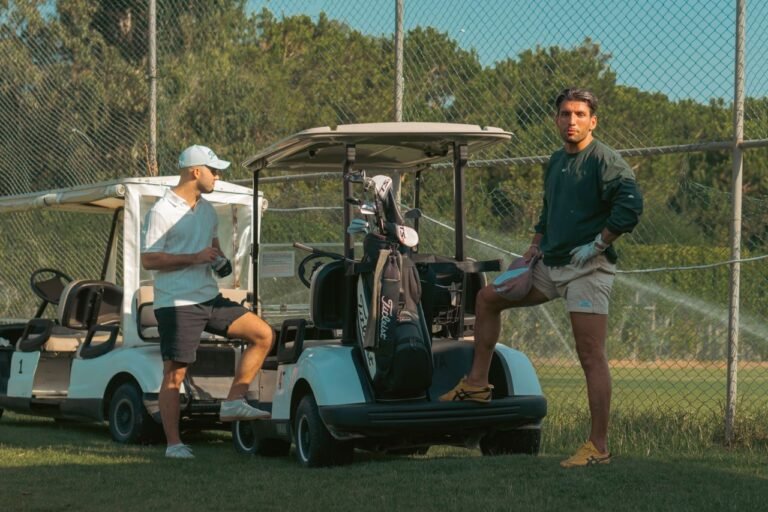
For example, a brand developing performance golf apparel should look for a manufacturer familiar with:
A manufacturer experienced in your product category will usually understand the production challenges before they become problems.
For brands developing golf collections, you can explore our custom golf apparel range to see the types of products we support.
Do not rely only on the supplier’s company description.
Look at its actual product range, manufacturing services, and examples of customization.
A reliable manufacturer should be able to clearly explain:
For example, a manufacturer providing OEM and ODM services should be able to support more than simply adding a logo to an existing garment.
It may provide services such as fabric sourcing, pattern development, sample revisions, branding, bulk production, and quality control.
You can review our custom apparel manufacturing services to see an example of the production services a full-service apparel manufacturer may provide.
Never judge a manufacturer only by its product photos or quotation.
The sample is one of the most important opportunities to evaluate the supplier before committing to bulk production.
A reliable manufacturer should have a clear sampling process.
Before ordering a sample, confirm:
The goal of sampling is not simply to see whether the garment looks good.
It is also an opportunity to see how the manufacturer communicates, handles changes, follows specifications, and responds when something needs to be corrected.
A supplier that is difficult to communicate with during sampling may become even more difficult to manage during bulk production.
Fabric has a major impact on the final quality, comfort, appearance, and performance of custom apparel.
A reliable manufacturer should not simply ask, “What fabric do you want?”
They should also be able to discuss whether the selected fabric is suitable for the product.
For example, depending on the product and target market, you may need to consider:
For performance golf apparel, polyester and polyester-spandex blends are commonly used because they can provide lightweight construction, moisture-wicking performance, and stretch.
You can read our guide to choosing the best fabric for golf apparel for a more detailed explanation of the main fabric options.
A good manufacturer should be able to recommend suitable fabrics based on your product, target market, budget, and intended use.
MOQ, or Minimum Order Quantity, is another important factor when choosing a supplier.
However, brands should not compare manufacturers based only on the lowest MOQ.
A very low MOQ may sound attractive, but it can sometimes come with higher unit costs, fewer fabric choices, or limitations on customization.
Ask the manufacturer:
For a more detailed explanation, see our Custom Golf Polo MOQ Guide.
The right MOQ is the one that fits your production plan and allows the manufacturer to maintain reasonable quality and cost.
Quality control should not begin only when the finished garments are ready to ship.
A reliable apparel manufacturer should have quality checks throughout the production process.
Depending on the project, quality control may include checking:
Ask the supplier how quality is checked and who is responsible for final inspection.
You should also understand what happens if a quality problem is discovered.
A professional supplier should be willing to discuss potential problems openly rather than avoiding the subject.
A good sample does not automatically mean you have found a good production partner.
For a growing brand, repeat-order consistency is often more important than the first sample.
Imagine you develop a golf polo that sells well and place another order six months later.
You will expect:
A reliable manufacturer should keep clear production specifications so that approved products can be reproduced consistently.
This becomes especially important when your brand starts carrying multiple collections or placing repeat orders.
Communication is often underestimated when brands compare suppliers.
A manufacturer may offer an attractive price, but poor communication can create significant problems later.
Pay attention to how the supplier responds during the inquiry and sampling stages.
Ask yourself:
A reliable manufacturer should not simply agree to everything.
Sometimes the best response from a supplier is:
“This requirement may increase the cost or MOQ. Here is another option you could consider.”
That shows the supplier is thinking about the production process rather than simply trying to win the order.
Price is important, but it should not be the only factor.
Two suppliers can quote different prices for what appears to be the same product because they may be using different:
Instead of asking only:
“Who has the lowest price?”
ask:
“What exactly is included in this price?”
Before comparing quotations, make sure the specifications are the same.
A lower quotation is not necessarily cheaper if it results in inconsistent quality, additional corrections, or production delays.
A supplier may be suitable for your first order but not necessarily for your long-term development.
Before choosing a manufacturer, think about where your brand may be in one or two years.
You may eventually need:
Ask whether the manufacturer has the capabilities and production system to support this growth.
For example, if your brand starts with custom golf polos and later adds midlayers, gilets, pants, shorts, or other apparel, it is useful to work with a supplier that can support a broader collection.
Not every apparel supplier offers the same level of customization.
OEM and ODM capabilities can be particularly important for brands that want to develop products rather than simply purchase standard garments.
OEM generally means the manufacturer produces according to your specifications, such as your design, tech pack, measurements, fabric requirements, and branding.
ODM involves more development support from the manufacturer, which may include fabric selection, product development, construction suggestions, and sample development.
If your brand is still developing its products, ask the supplier exactly what level of development support it can provide.
Our About Dora Garment page explains our approach to OEM and ODM apparel production, from fabric sourcing and sample development through bulk production and quality control.
If you are working with an overseas apparel manufacturer, international communication and shipping experience are also important.
Ask whether the manufacturer regularly works with customers in your target market.
You may need support with:
A manufacturer experienced with international customers is generally more familiar with the expectations involved in cross-border apparel production.
You do not need to find a manufacturer that is perfect in every category.
Instead, compare suppliers using the factors that matter most to your brand.
A simple evaluation checklist can include:
| Factor | Questions to Ask |
|---|---|
| Product experience | Do they specialize in my product category? |
| Fabric | Can they recommend suitable fabrics? |
| Sampling | Is the sample process clear and professional? |
| MOQ | Does the MOQ fit my production plan? |
| Quality control | How is quality checked? |
| Customization | Can they support my required details? |
| Communication | Do they respond clearly and consistently? |
| Production | Can they meet my required timeline? |
| Repeat orders | Can they reproduce approved products consistently? |
| Scalability | Can they support larger orders and more styles later? |
| International experience | Are they experienced with overseas buyers? |
| Pricing | Is the quotation clear and based on the same specifications? |
This type of comparison can help you avoid choosing a supplier simply because it has the lowest initial quotation.
There are also several warning signs brands should take seriously.
If your requirements are complex but the supplier never asks for clarification, they may not have fully reviewed the project.
A very low price may indicate differences in fabric, construction, branding, packaging, or quality standards.
You should understand who is responsible for sampling, production, quality control, and shipping.
Every production business can encounter problems. What matters is how those problems are identified and handled.
If the sample details are not confirmed before production, misunderstandings are more likely.
A professional supplier should maintain communication throughout the project rather than becoming difficult to reach once an order is confirmed.
Choosing a custom apparel manufacturer is not simply about finding someone who can make your first order.
For a growing brand, the goal should be to build a stable supply chain.
The right manufacturing partner should be able to help you:
This is why supplier selection should be treated as a long-term business decision rather than a one-time price comparison.
Before placing your first bulk order, make sure you can answer “yes” to most of these questions:
If the answer is yes, you are much more likely to have found a supplier that can become a reliable long-term production partner.
At Dora Garment, we support brands, golf clubs, teams, and organizations with custom apparel manufacturing, including OEM and ODM development, fabric sourcing, sampling, branding, bulk production, and quality control.
We focus on building long-term production relationships rather than simply supplying one order.
If you already have a design, tech pack, sample, or product idea, you can contact us to discuss your requirements and production needs.
The best manufacturer is not necessarily the one with the lowest quotation. It is the one that can consistently deliver the quality, communication, customization, and production support your brand needs as it grows.